Why Ethnicity, Facial Structure, and Aging Patterns Matter in Aesthetic Treatment Planning

Looking naturally younger is not about adding more volume or creating the tightest possible face. It is about preserving facial balance, proportion, and individual identity.
Have you ever wondered why the same aesthetic treatment can look completely different on two people?
Why does cheek augmentation make one person look fresher and more youthful, while making another person’s face appear wider or heavier?
Or why can someone in their 40s have relatively few wrinkles, yet begin to notice sagging, loss of jawline definition, and a heavier-looking lower face?
The answer is that facial aging is not determined by chronological age alone.
It is influenced by several interconnected factors:
Facial Anatomy + Bone Structure + Fat Distribution + Skin Quality + Ethnic Background + Individual Aging Pattern
This is why a well-designed aesthetic treatment plan should not begin with:
“What treatment should I get at my age?”
A more useful question is:
“How is my face structured, and how is it changing over time?”
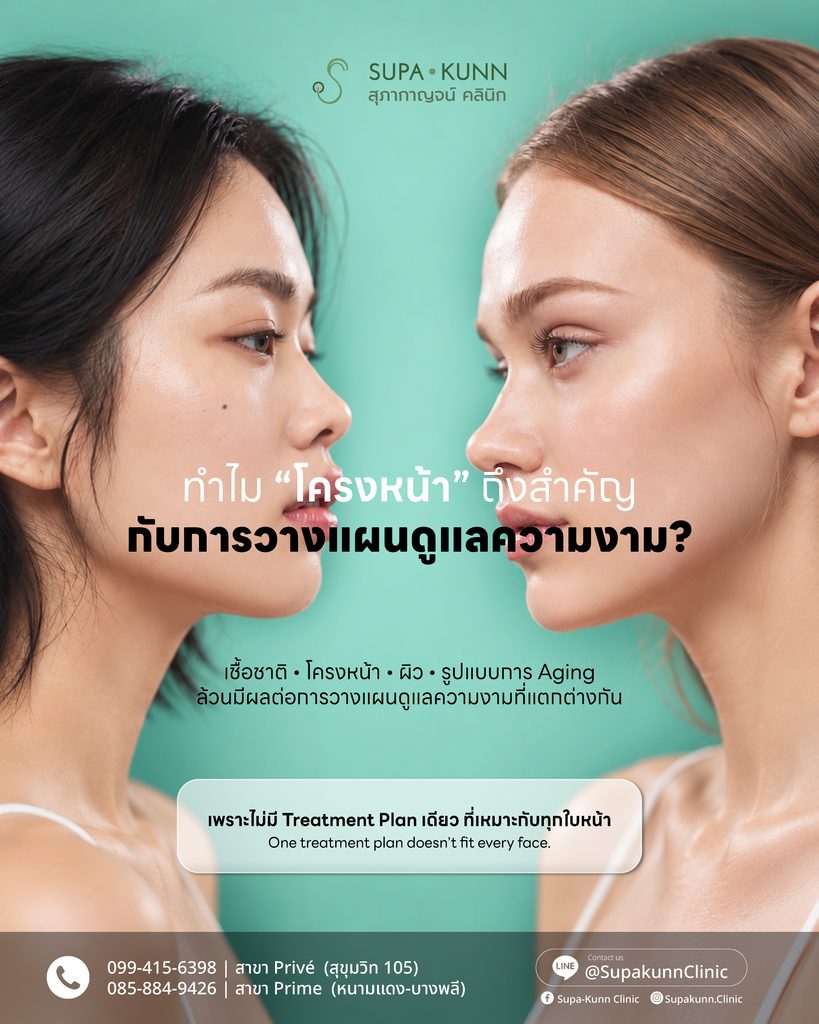
Does Ethnicity Really Matter in Aesthetic Treatment Planning?
Yes — but ethnicity should never be used as a fixed treatment formula.
Research in facial anatomy and aesthetic medicine has identified population-level differences in:
- Facial skeletal structure
- Facial width and projection
- Distribution of facial fat
- Skin characteristics and pigmentation
- Patterns of facial aging
- Aesthetic preferences
However, not every Asian face has the same anatomy, and not every Western face follows the same structural pattern.
Ethnicity should therefore be considered as one part of the clinical assessment, rather than as a rule that determines what a face should look like.
The more important goal is to improve facial balance while preserving each patient’s individual and ethnic identity.
How Do Asian and Western Facial Structures Differ?
When discussing population-level anatomical tendencies, East and Southeast Asian faces are often described as having greater facial width and relatively less anterior projection of certain midfacial structures.
In comparison, people of European ancestry may, on average, demonstrate different relationships between facial width, length, and anterior projection.
These differences can influence aesthetic treatment planning.
But the key clinical concept is not simply “Asian versus Western.”
It is:
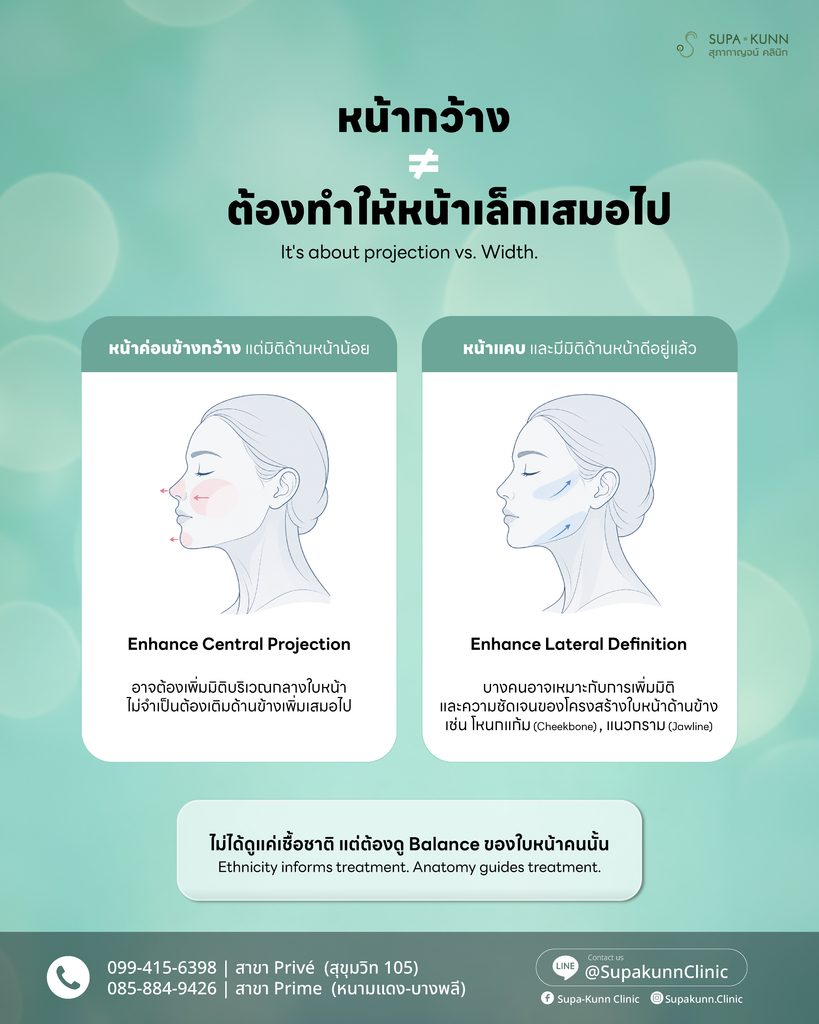
Projection vs. Width
Consider a face that is naturally relatively wide but has limited central projection.
If too much volume is added laterally — for example, around the outer cheek or zygomatic area — the face may appear even wider or heavier.
In appropriately selected patients, the physician may therefore consider enhancing anterior or central projection, such as the medial cheek, chin, or other midline structures depending on the individual’s anatomy.
The goal is to improve three-dimensional facial balance without unnecessarily increasing facial width.
In contrast, a narrower face with sufficient central projection may, in selected cases, benefit from greater lateral definition, such as enhancement of the cheekbone or jawline.
Therefore, the correct principle is not:
“Asian faces should be filled here, while Western faces should be filled there.”
The better question is:
“Are this patient’s facial projection and width in balance?”
Why Copying Aesthetic Trends From Another Face May Not Work
Today, aesthetic trends spread globally through social media.
Popular features may include:
- High cheekbones
- Sharp jawlines
- V-shaped faces
- Baby-face proportions
- Fuller lips
- High nasal projection
- Hollow or sculpted cheeks
The problem begins when one attractive feature is copied from one face and placed onto another without considering the overall facial proportions.
A good example is cheek augmentation.
In some Caucasian facial structures, adding volume to the lateral cheek or zygomatic region may enhance definition and provide aesthetically pleasing structural support.
However, in an Asian patient who already has relatively prominent bizygomatic width, excessive lateral augmentation may make the face appear wider.
Published consensus recommendations on Asian facial aesthetics have therefore discussed the importance of medial cheek augmentation in appropriately selected patients to enhance anterior projection without unnecessarily increasing midfacial width.
The key message is simple:
A technique that looks beautiful on one face may not create the same balance on another.
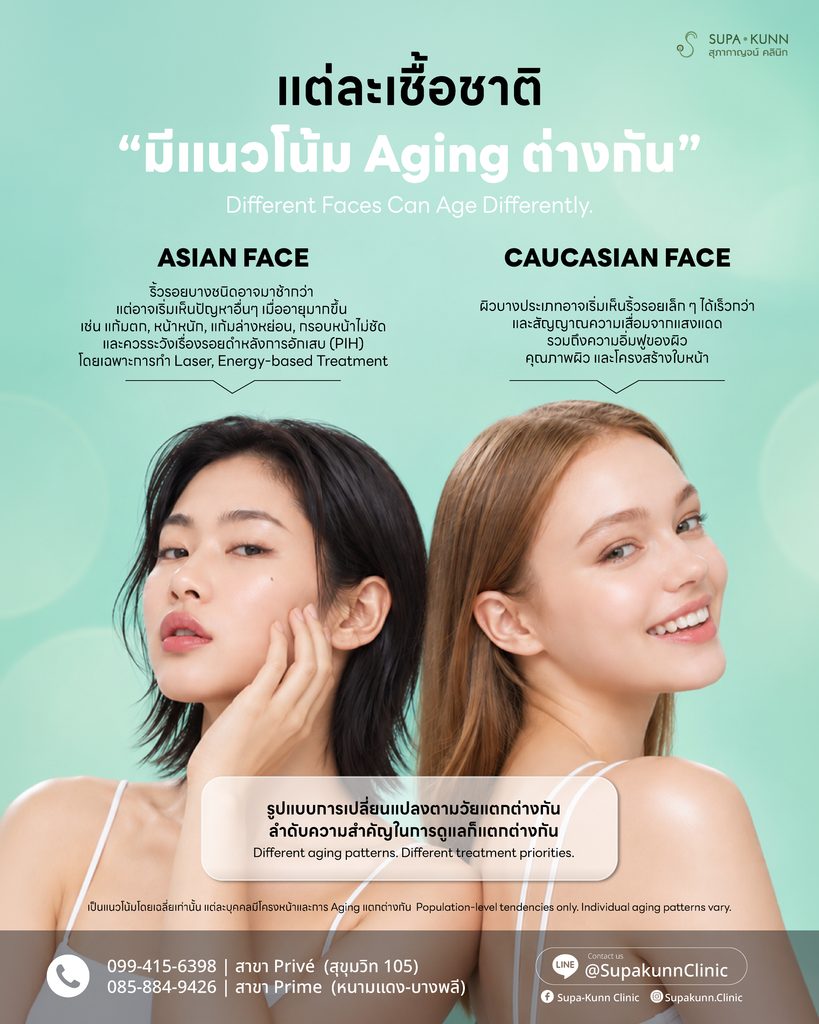
Do Asian and Caucasian Faces Age Differently?
This is another important consideration when planning long-term aesthetic care.
Several studies have reported that visible signs of photoaging, particularly certain fine lines and wrinkles, may appear later on average in some Asian populations compared with lighter-skinned Caucasian populations.
Differences in melanin, skin characteristics, facial structure, and soft tissue may all contribute.
But this does not mean that:
“Asian faces simply age more slowly.”
Facial aging is much more complex than the development of wrinkles.
It involves changes in multiple anatomical layers:
Skin Changes + Volume Loss + Fat Compartment Changes + Ligamentous Changes + Tissue Descent + Bone Remodeling
An Asian patient may therefore reach their 40s with relatively few forehead lines or crow’s feet, yet begin to notice:
Cheek descent → Deeper nasolabial folds → Heavier lower face → Jowling → Reduced jawline definition
In other words:
Wrinkles may appear later in some individuals, but sagging, volume redistribution, and structural aging still occur.
This is why an anti-aging strategy for Asian patients should not focus only on Botox or wrinkle reduction.
Structural support, tissue position, facial contour, and skin quality should also be assessed.
Skin Type Matters — Not Just Facial Shape
Another important difference involves melanin and skin phototype.
Higher levels of melanin can provide a degree of natural photoprotection, which may contribute to later development of certain signs of photoaging in some populations.
However, people with skin of color, including many Asian patients, may also be more susceptible to Post-Inflammatory Hyperpigmentation (PIH) following inflammation or skin injury.
This becomes particularly important when planning energy-based and laser treatments.
Factors such as:
Laser Type
Wavelength
Energy
Fluence
Pulse Duration
Treatment Interval
Cooling
Post-treatment Care
should be selected with the patient’s skin type and pigmentation tendency in mind.
Higher energy does not automatically mean better results.
In patients who are prone to PIH, inappropriate treatment parameters may increase the risk of unwanted pigmentation.
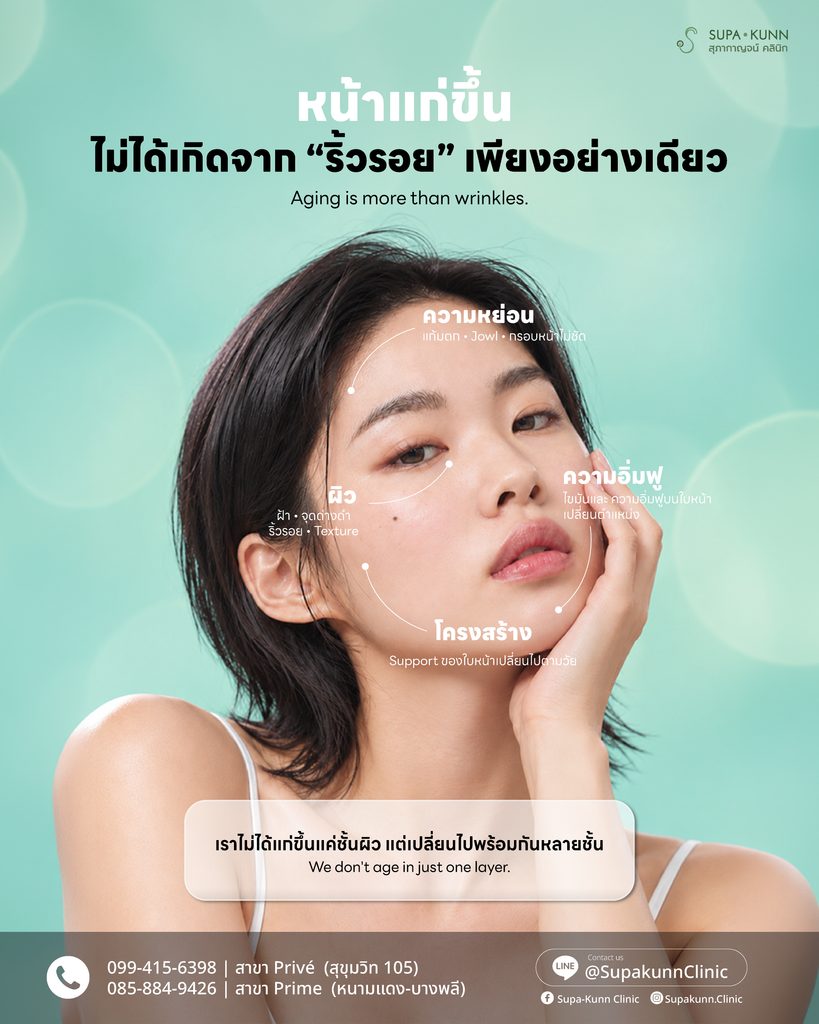
What Makes Us Look Older Than Our Actual Age?
When we look at someone’s face, our brain does not estimate age based on wrinkles alone.
Research into perceived facial aging suggests that several features contribute to how old or young a person appears, including wrinkles and skin texture, sagging or ptosis, facial shape, and pigmentation.
The relative importance of these features can also differ between populations.
This means that looking older than your chronological age may result from changes occurring across several layers.
1. Skin Quality
Signs may include:
- Uneven skin tone
- Melasma or pigmentation
- Dryness
- Rough or uneven texture
- Enlarged pores
- Fine lines
Healthy-looking skin can significantly influence how youthful a face appears — even before facial shape is considered.
2. Volume Distribution
Facial aging is not simply a matter of “losing volume.”
Volume also changes position.
As midface support changes and soft tissues descend, the face may begin to appear more tired.
Nasolabial folds may become more visible, while the lower face may gradually look heavier.
This is why simply “adding more filler” is not always the answer.
3. Facial Sagging
A once-defined jawline may gradually become less clear.
Jowls may begin to appear.
The lower face can become heavier, and an oval or V-shaped facial contour may gradually appear more bottom-heavy.
In some people, these changes can contribute more to perceived aging than fine wrinkles do.
4. Changes in Structural Support
The facial skeleton also changes with age.
Bone remodeling can affect the support available to overlying fat compartments, ligaments, muscles, and skin.
This is why facial aging should not be viewed as a problem occurring only at the surface of the skin.
The deeper supporting structures matter too.
5. Facial Expression
A youthful face does not necessarily mean a face with zero wrinkles.
Expression is part of what makes a face look natural and alive.
For example, excessive reduction of muscle movement may create smoother skin, but eliminating facial expression completely does not necessarily make someone appear younger or more natural.
The goal should be balance.
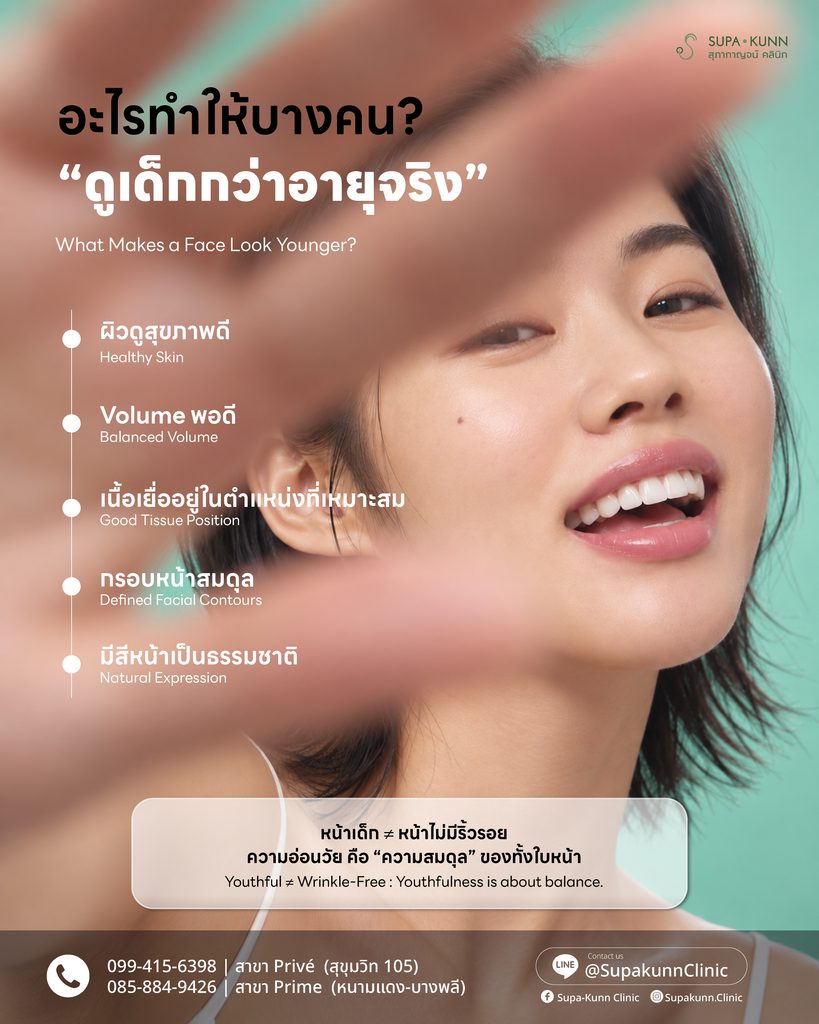
What Makes Some People Look Younger Than Their Age?
Again, the answer is not simply “fewer wrinkles.”
People who appear naturally youthful often maintain balance across several characteristics.
Good Skin Quality
The skin appears healthy, even, hydrated, and relatively smooth.
Appropriate Facial Volume
The face is neither excessively hollow nor unnecessarily full.
Good Tissue Position
The midface and lower face maintain appropriate structural support.
Defined Facial Contours
The jawline and other facial transitions remain relatively clear without looking unnaturally sharp.
Natural Expression
The person can still smile, frown, laugh, and express emotion naturally.
And perhaps most importantly:
They still look like themselves.
Aesthetic Trends Are Changing: From “What Did You Have Done?” to “Why Do You Look Better?”
Traditional aesthetic treatment often focused on correcting individual features.
Nasolabial fold? → Filler
Jaw muscles? → Botox
Sagging? → Lifting treatment
Wrinkles? → Botox
Modern aesthetic medicine is increasingly moving toward full-face assessment and individualized combination treatment.
Why?
Because the visible problem is not always caused by the area where we see it.
For example:
A deep nasolabial fold does not automatically mean the fold itself needs to be filled.
One patient may have reduced midface support.
Another may have tissue descent.
Another may have underlying structural deficiency.
And some patients may have several factors occurring simultaneously.
Simply filling the visible line without understanding its cause may add unnecessary volume and make the face appear heavier.
Natural Results Do Not Mean “Doing as Little as Possible”
In aesthetic medicine, the word natural is sometimes interpreted as:
“Use the least filler possible.”
“Use the fewest shots possible.”
“Don’t change anything.”
But a natural result should mean:
Treat what is necessary, in the appropriate anatomical location, while preserving the person’s facial proportions and identity.
One patient may need only skin-quality treatment.
Another may benefit from structural support.
Some patients may not need additional filler at all, but may benefit more from tissue tightening or repositioning.
Others may have genuine volume deficiency, in which case lifting alone may not fully address the concern.
The principle is:
Less is not always more.
More is not always better.
Appropriate is better.
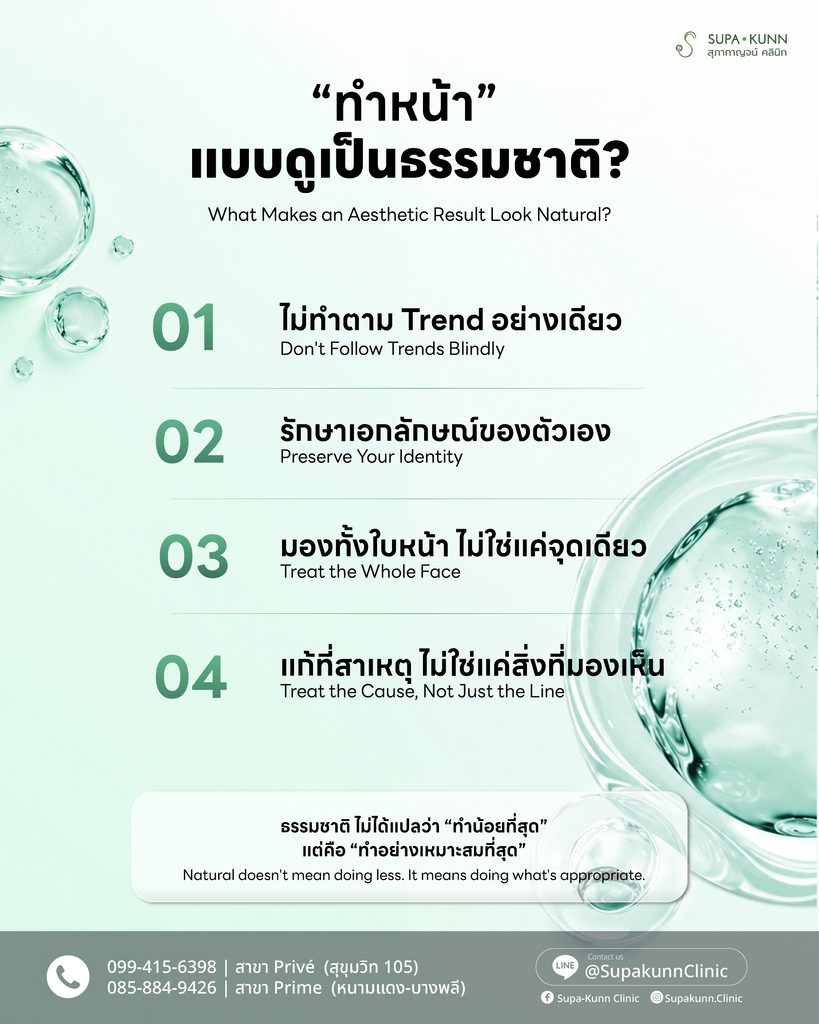
How Can Aesthetic Treatment Look More Natural?
1. Don’t Start With a Trend
Instead of beginning with:
“I want cheeks like this person.”
“I want lips like this.”
“I want this jawline.”
Start with:
“What is causing imbalance in my own face?”
Trends change. Your anatomy does not follow trends.
2. Preserve Your Identity
The goal should never be to turn an Asian face into a Western face — or to make every patient fit the same aesthetic template.
Consensus literature in Asian facial aesthetics supports treatment strategies that enhance balance while respecting the patient’s original ethnic and facial characteristics.
A good result should still look recognizably like you.
3. Assess the Whole Face, Not Just One Feature
The cheek, temple, under-eye area, nose, chin, and jawline do not exist independently.
Changing one area can alter the visual proportions of the entire face.
A comprehensive assessment should therefore consider:
Front View + 45° View + Side Profile
rather than evaluating a single concern in isolation.
4. Treat the Cause, Not Just the Line
Seeing a fold does not automatically mean filling the fold.
Seeing sagging does not mean everyone needs the same lifting device.
Having a wide-looking face does not mean everyone needs masseter Botox.
The physician should determine whether the concern originates primarily from:
Bone / Muscle / Fat / Ligaments / Skin
or from a combination of several layers.
5. Treat the Aging Pattern — Not the Age on the ID Card
Two 35-year-old patients may require completely different treatment plans.
One may primarily have pigmentation concerns while maintaining excellent facial structure.
Another may have clear skin but already show early midface descent and reduced jawline definition.
Therefore:
Age tells us when you were born.
Your face tells us how you are aging.
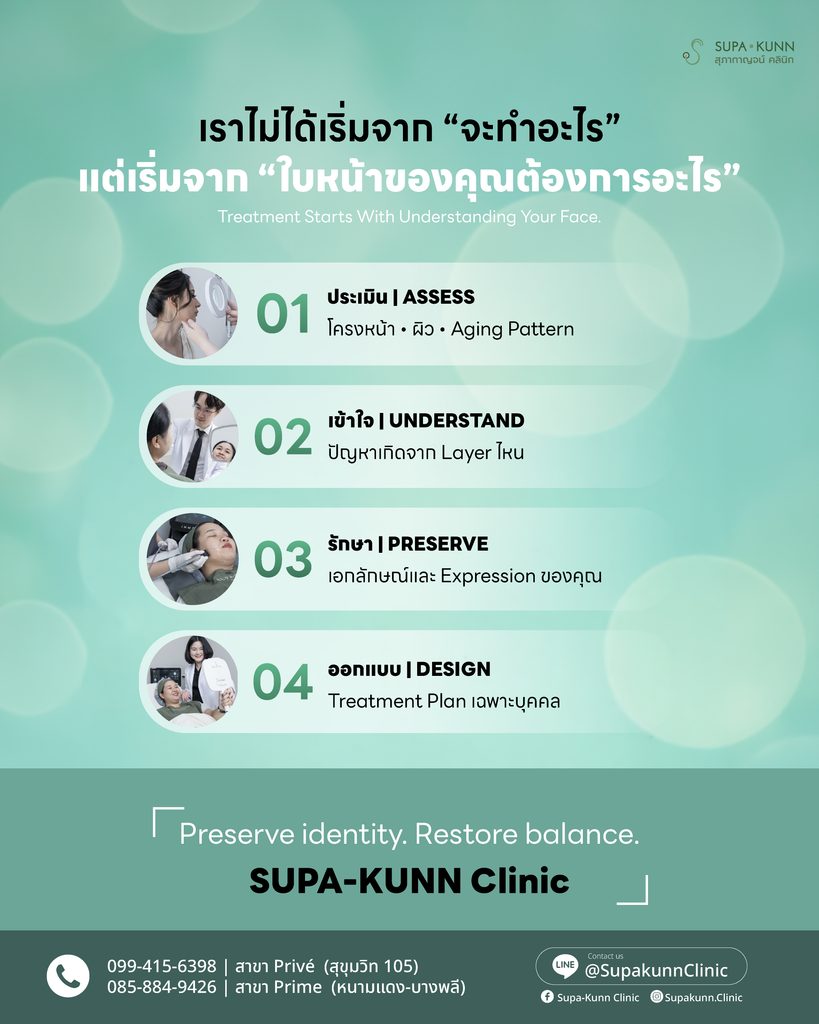
The SUPA-KUNN Approach: Preserve Identity, Restore Balance
At SUPA-KUNN Clinic, we believe good aesthetic care should not begin with:
“Which machine do you want today?”
Instead, it should begin by understanding:
How is your face structured? → How is it aging? → What should we preserve?
A comprehensive treatment assessment may consider:
Ethnic Background
Facial Anatomy
Projection & Width
Bone Structure
Fat Distribution
Skin Quality
Pigmentation
Tissue Laxity
Facial Expression
Individual Preferences
Only then can an individualized treatment plan be designed.
Our goal is not to create one standardized “ideal face” for every patient.
It is to help each person look:
Fresher. More balanced. More youthful. Still recognizably themselves.
Assess → Understand the Anatomy → Preserve Identity → Design the Treatment
Because ultimately:
Natural beauty is not about turning you into someone else.
It is about helping you remain yourself — looking refreshed, balanced, and naturally well.
Key Clinical Takeaways
Projection vs. Width
In Asian faces with relatively greater facial width and less central projection, enhancing anterior midface projection in appropriately selected areas may improve three-dimensional balance without unnecessarily increasing facial width.
In narrower faces with adequate central projection, carefully designed lateral definition may be appropriate in selected patients.
The treatment decision should be based on individual anatomy rather than ethnicity alone.
Aging Is More Than Wrinkles
Some Asian populations may develop visible fine lines from photoaging later than lighter-skinned Caucasian populations.
However, facial aging still involves volume redistribution, tissue descent, jowling, changes in structural support, and loss of jawline definition.
Anti-aging treatment should therefore address more than wrinkles alone.
Skin Type Matters
Patients with higher levels of skin pigmentation may be more susceptible to post-inflammatory hyperpigmentation following inflammation or certain energy-based treatments.
Technology, treatment parameters, and aftercare should therefore be selected according to the individual’s skin type and clinical condition.
Natural Does Not Mean “No Treatment”
A natural result means preserving facial proportion, movement, expression, and identity.
The goal is not to create the fullest, tightest, or most wrinkle-free face possible.
It is to create the right balance for that individual face.
References
- Liew S, et al. Consensus on Changing Trends, Attitudes, and Concepts of Asian Beauty. Aesthetic Plastic Surgery. 2016.
- Sundaram H, et al. Consensus on Current Injectable Treatment Strategies in the Asian Face. Aesthetic Plastic Surgery. 2016.
- Niddam J, et al. Comparison of Aesthetic Facial Criteria Between Caucasian and East Asian Female Populations: An Esthetic Surgeon’s Perspective. Asian Journal of Surgery. 2017.
- Fitzgerald R, et al. Update on Facial Aging. Aesthetic Surgery Journal. 2010.
- Alexis AF, Obioha JO. Literature regarding ethnicity and aging skin.
- Vashi NA, et al. Literature regarding ethnic differences in facial aging, pigmentation, and photoaging.
- Wang YC, et al. Clinical Evaluation of Skin Aging: A Systematic Review. Archives of Gerontology and Geriatrics. 2025.
Medical Disclaimer: Facial anatomy, skin characteristics, and aging patterns vary substantially between individuals, including people of the same ethnicity. The characteristics discussed in this article describe population-level tendencies and should not be used to determine an individual’s treatment without appropriate medical assessment. Treatment outcomes vary between individuals. This article is intended for educational purposes only and does not replace individualized medical diagnosis or professional medical advice.
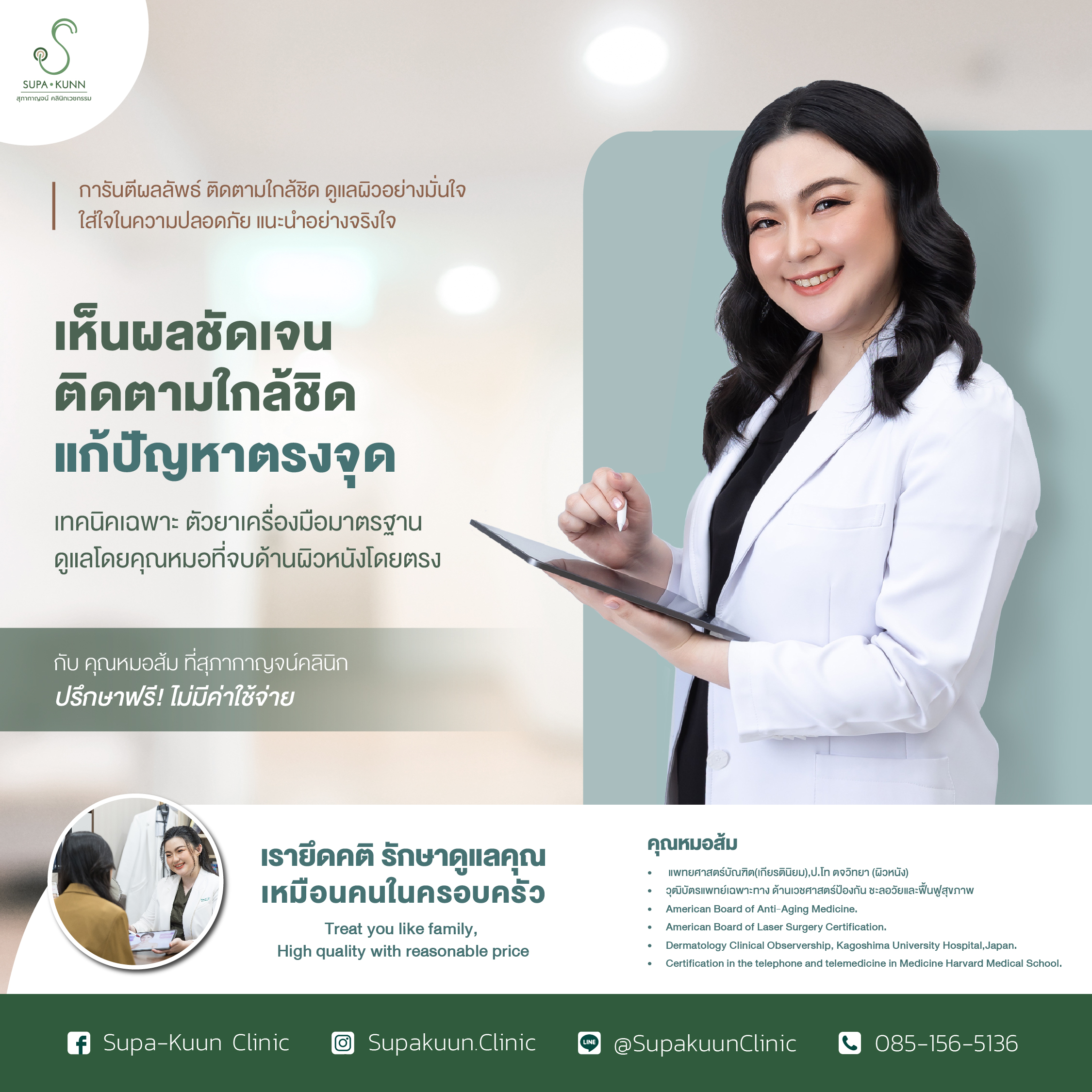
👩🏻⚕️ที่สุภากาญจน์คลินิก...เราใส่ใจ ให้คุณมากกว่าได้มากกว่าที่ไหน 👩🏻⚕️ 1 ใน 10 ที่ได้รับเลือกเป็นคลินิกสวย มั่นใจ ปลอดภัย คลินิกคุณภาพ จากสำนักข่าวชั้นนำ #ได้ดูแลผิวอย่างมั่นใจ ✅ดูแลคุณโดยคุณหมอที่เชี่ยวชาญ จบด้านผิวหนังโดยตรง ✅ดูแลคุณด้วยทีมที่มีประสบการณ์หลายสิบปี ✅ดูแลคุณ ภายใต้มาตรฐาน ความสะอาด ปลอดภัย สูงสุด #ได้ดูแลผิวอย่างสบายใจ ✅ดูแลคุณ ตรงจุด ตรงโจทย์ปัญหาผิว ✅ดูแลคุณ ด้วยตัวยาแท้ เครื่องมาตรฐานสูงสุด US FDA มั่นใจในความเปลี่ยนแปลง เห็นผล ✅ไม่มีเซลล์หน้าร้าน และ ไม่มีการขายคอร์ส ✅ให้คุณมั่นใจว่า คุณหมอแนะนำการรักษาที่เหมาะสมกับคุณจริงๆ 🎀 **** สนใจสอบถาม นัดคิว ได้ที่ **** https://linktr.ee/SupakunnClinic สุภากาญจน์ คลินิก ลาซาล-แบริ่ง โทร : 0851565136 Line : @SupakunnClinic Instagram : Supakunn.clinic Tiktok : Supakunn.clinic
📍 Privé Sukhumvit 105 | 099-415-6398 📍 Prime Namdang–Bangplee | 085-884-9426
Copyright © SUPA-KUNN CLINIC. All rights reserved. Unauthorized use and/or duplication of this material without express and written permission from this site’s author and/or owner is strictly prohibited. Excerpts and links may be used, provided that full and clear credit is given to SUPA-KUNN CLINIC with appropriate and specific direction to the original content.
Share: