Shaving-Induced Folliculitis (Pseudofolliculitis Barbae)
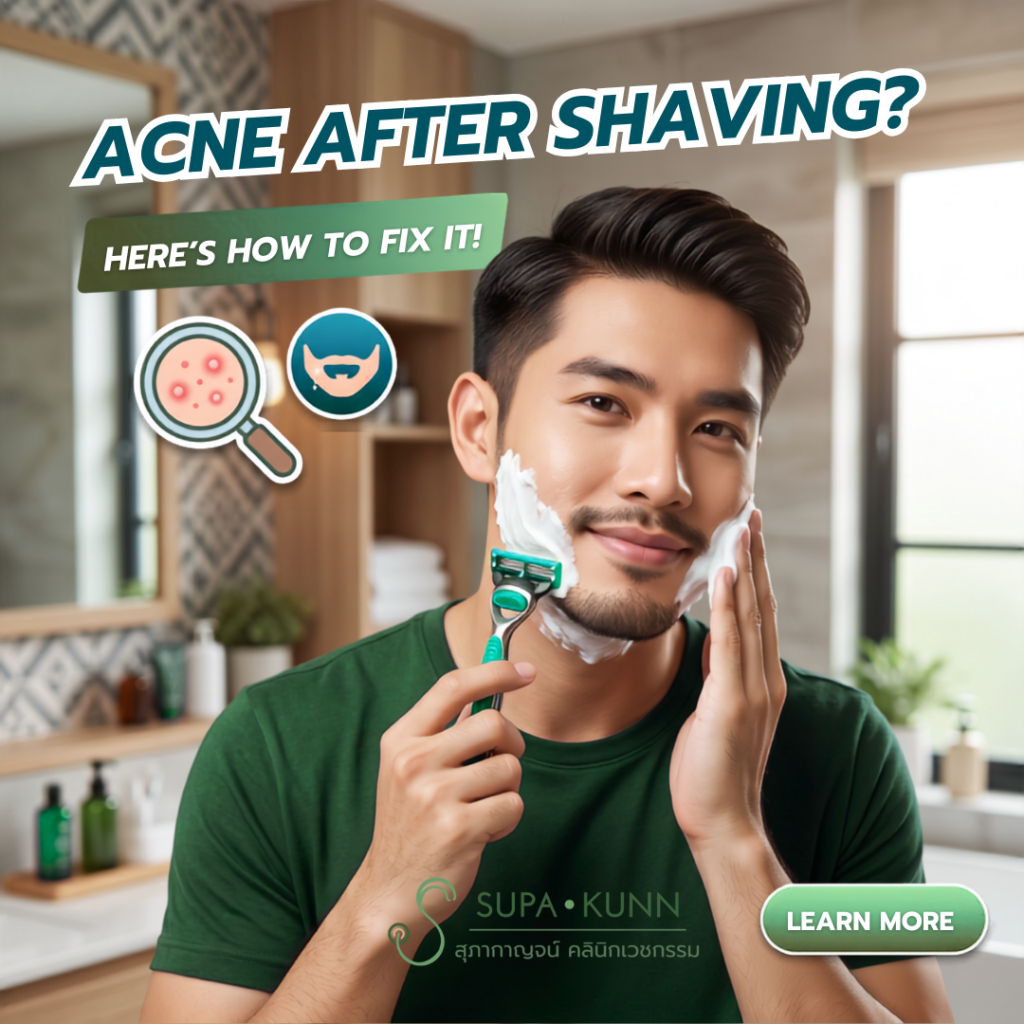
Causes, Proper Shaving Techniques, and Effective Treatments
Many men experience red bumps, pus-filled spots, or acne-like irritation on the face and neck after shaving. In medical terms, this condition is known as Pseudofolliculitis Barbae or ingrown hairs—a common skin issue primarily caused by improper shaving habits and techniques.
📌 Understanding the Cause & Initial Prevention
This condition occurs when hair is cut too short, causing it to curve and grow back into the skin, leading to inflammation and localized irritation. The best preventive approach starts with adjusting your shaving habits:
- Avoid shaving too close to the skin: If you are prone to sensitive skin or frequent folliculitis, switch to electric shavers or beard trimmers set to leave at least 0.5 mm (5 mm settings) of stubble. This prevents short hair ends from piercing back into the skin.
- Stop plucking or waxing: During active inflammation, refrain from aggressive hair removal methods like plucking, scraping, or waxing, as these can exacerbate skin irritation.
✂️ 6 Proper Shaving Techniques to Prevent Bumps
Adjusting your daily shaving routine can significantly reduce inflammatory breakouts. Here are key guidelines recommended by the American Academy of Dermatology (AAD):
- Prepare your skin (Wet skin before shaving)
- Before shaving, apply a warm compress or cleanse the area gently with mild soap and warm water. Warmth softens the hair shaft and opens up pores, reducing friction during the shave.
- Always use a shaving aid (Use a shaving cream or gel)
- Apply a suitable shaving cream or gel to minimize friction and tension between the blade and skin. This helps prevent ingrown hairs effectively. Be sure to choose formulas free of harsh irritants to avoid allergic reactions.
- Shave only in the direction of hair growth (Shave in the direction that hair grows)
- This step is crucial. Observe your hair growth pattern and shave strictly along that direction. Never shave against the grain, back-and-forth, or in circular motions. Shaving against the grain cuts the hair beneath the skin surface, making ingrown hairs far more likely.
- Use a sharp blade and shave lightly (Use a sharp blade and shave lightly)
- Always ensure your razor blade is sharp, and use gentle, light strokes without pressing the blade hard against the skin.
- Change razor blades regularly (Change blades regularly)
- Avoid using the same disposable razor blade for extended periods. Replace blades after every 5 to 7 shaves to avoid dullness, which pulls on the hair and harbors bacteria that lead to infection.
- Experiment with the right tools (Experiment)
- Skin types vary from person to person. Pay attention to whether your skin responds better to disposable razors or electric shavers. Electric shavers often reduce ultra-close cuts, helping to minimize razor bumps for many individuals.
⚠️ Critical Precaution: Never try to shave off the acne!
If you already have existing pimples or inflamed razor bumps, do not attempt to shave over or slice them off. Shave around these delicate areas gently. Shaving over inflamed lesions breaks open the bumps, spreads bacteria, and leads to severe skin aggravation.
🩺 Medical Treatment Options for Folliculitis
If preventive habits are not enough or if you suffer from chronic ingrown hairs, medical treatments (Topical Medicinal Treatments for Ingrown Hairs) can help restore your skin:
| Topical Medication / Product Class | Mechanism & Benefits |
| Benzoyl peroxide + Glycolic acid | Antimicrobial and anti-inflammatory action combined with gentle exfoliation, helping trapped hairs penetrate through the surface without embedding. |
| Topical retinoids | Regulates cell turnover, reduces follicular clogging, and thins out hyperkeratotic skin layers. |
| Low-potency topical corticosteroids | Mild topical steroids used for short-term spot application to reduce acute swelling, redness, and itching. |
| Topical antibiotics | Topical agents (such as Clindamycin or Erythromycin) target secondary bacterial infections in pustular lesions. |
Summary of Main Treatment Approaches:
- Topical or Oral Medications: To calm active inflammation and clear infection.
- Laser Hair Removal: The long-term solution for chronic cases. Laser therapy targets hair follicles at the root, thinning hair growth or stopping it altogether to permanently eliminate ingrown hair formation.
🏥 Professional Care at SUPA-KUNN CLINIC
If your skin condition does not improve with self-care, or if you are dealing with persistent dark spots and scarring, feel free to schedule a consultation at SUPA-KUNN CLINIC.
Our team provides thorough skin evaluations and customized treatment plans tailored to your specific skin needs—ranging from specialized topical regimens to advanced laser hair removal—helping you regain smooth, clear, and confident skin.
Information referenced from the American Academy of Dermatology (AAD) standards References: www.aad.org, acne.org
👩🏻⚕️ที่สุภากาญจน์คลินิก...เราใส่ใจ ให้คุณมากกว่าได้มากกว่าที่ไหน 👩🏻⚕️ 1 ใน 10 ที่ได้รับเลือกเป็นคลินิกสวย มั่นใจ ปลอดภัย คลินิกคุณภาพ จากสำนักข่าวชั้นนำ #ได้ดูแลผิวอย่างมั่นใจ ✅ดูแลคุณโดยคุณหมอที่เชี่ยวชาญ จบด้านผิวหนังโดยตรง ✅ดูแลคุณด้วยทีมที่มีประสบการณ์หลายสิบปี ✅ดูแลคุณ ภายใต้มาตรฐาน ความสะอาด ปลอดภัย สูงสุด #ได้ดูแลผิวอย่างสบายใจ ✅ดูแลคุณ ตรงจุด ตรงโจทย์ปัญหาผิว ✅ดูแลคุณ ด้วยตัวยาแท้ เครื่องมาตรฐานสูงสุด US FDA มั่นใจในความเปลี่ยนแปลง เห็นผล ✅ไม่มีเซลล์หน้าร้าน และ ไม่มีการขายคอร์ส ✅ให้คุณมั่นใจว่า คุณหมอแนะนำการรักษาที่เหมาะสมกับคุณจริงๆ 🎀 **** สนใจสอบถาม นัดคิว ได้ที่ **** https://linktr.ee/SupakunnClinic สุภากาญจน์ คลินิก ลาซาล-แบริ่ง โทร : 0851565136 Line : @SupakunnClinic Instagram : Supakunn.clinic Tiktok : Supakunn.clinic
📍 Privé Sukhumvit 105 | 099-415-6398 📍 Prime Namdang–Bangplee | 085-884-9426
Copyright © SUPA-KUNN CLINIC. All rights reserved. Unauthorized use and/or duplication of this material without express and written permission from this site’s author and/or owner is strictly prohibited. Excerpts and links may be used, provided that full and clear credit is given to SUPA-KUNN CLINIC with appropriate and specific direction to the original content.
Share: